
Sonoma County landscape, Wildfire Mitigation Advisors service area

Professional Certification

CWMS: Certified Wildfire Mitigation Specialist

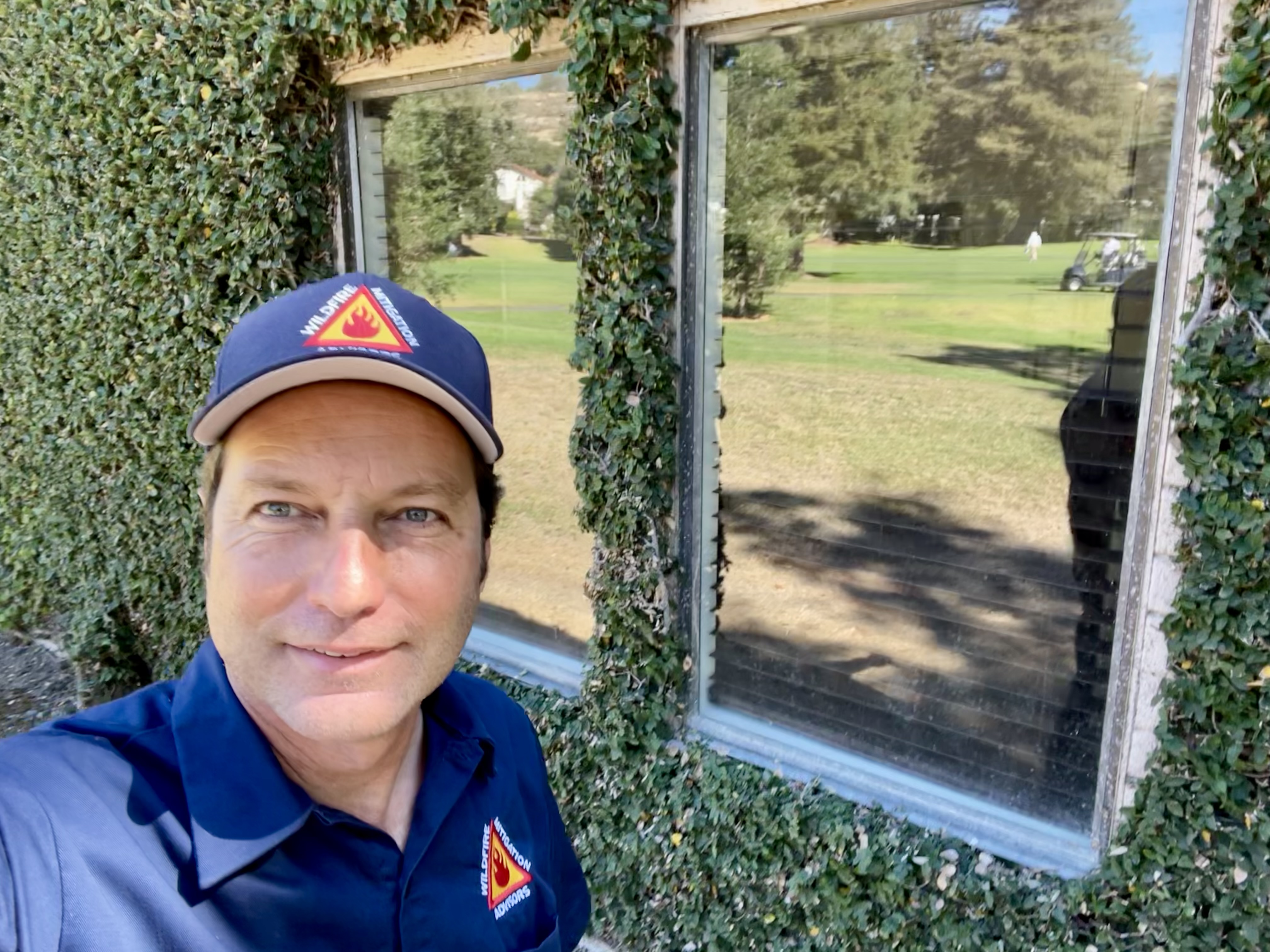
The Certified Wildfire Mitigation Specialist (CWMS) credential, administered by the National Fire Protection Association (NFPA), represents the highest standard of professional wildfire risk assessment in the United States. Stuart Mitchell of Wildfire Mitigation Advisors holds this credential and has applied it to over 1,000 property assessments across Sonoma, Napa, and Marin Counties.

Book Your CWMS Assessment

A Certified Wildfire Mitigation Specialist (CWMS) is a professional credentialed by the National Fire Protection Association (NFPA) to evaluate wildfire risk for homes, commercial buildings, and land. This is the highest recognized standard for wildfire assessment in the United States. Stuart Mitchell of Wildfire Mitigation Advisors holds this credential and has completed over 1,000 property evaluations across Sonoma, Napa, and Marin Counties, including properties in Santa Rosa, Sebastopol, Petaluma, and the surrounding hills.

WMA assesses and prioritizes. We do not perform this work or profit from it, so the recommendations in your report reflect only what your property actually needs.

What Is a CWMS?

The Certified Wildfire Mitigation Specialist (CWMS) is a professional certification developed by the NFPA, the same organization that creates the fire protection codes used across the United States. The CWMS program was created to establish a national standard for wildfire risk assessment professionals.

Earning the CWMS requires demonstrated expertise in:

Wildfire Behavior Science

Understanding how fire behaves in different terrain, vegetation, and weather conditions, including the extreme wind events common in Northern California.

Building Science

Knowledge of construction materials, methods, and vulnerabilities, understanding how different building components resist or succumb to ember attack and radiant heat.

Defensible Space Management

Expertise in vegetation management, fuel reduction, and landscape design that reduces wildfire risk while preserving the character of the property.

Community Risk Assessment

Ability to evaluate neighborhood-level factors including infrastructure, emergency access, water supply, and collective vulnerability.

The CWMS is not a weekend workshop or online certificate. It requires real-world experience, demonstrated knowledge, and ongoing professional development. When you hire a CWMS, you are hiring someone whose expertise has been verified by the nation's leading fire protection authority.
Wildfire mitigation specialists conducting a property assessment, evaluating home exterior for fire vulnerabilities

Photo: Berkeley FireSafe Council (firesafeberkeley.org)

What a CWMS Risk Assessment Covers

A CWMS risk assessment is a systematic evaluation of your property that follows standardized protocols. Here is what we assess:

Structural Assessment

Evaluation of roofing, siding, windows, vents, eaves, soffits, decks, fencing, and all attached structures for wildfire vulnerability. We assess building materials, condition, and compliance with current wildfire building standards.

Defensible Space Evaluation

Detailed analysis of vegetation management across all three zones (0–5 ft, 5–30 ft, 30–100 ft), including plant species identification, fuel loading assessment, and recommendations for fire-resistant landscaping.

Access & Egress Review

Assessment of driveway width, road conditions, turnout areas, address visibility, and evacuation route considerations, critical factors for both emergency response and insurance evaluation.

Water Supply & Fire Protection

Evaluation of available water sources, hydrant locations, sprinkler systems, and water storage. For rural properties, this includes assessment of private water supply adequacy.

Topographic & Environmental Analysis

Assessment of slope, aspect, prevailing wind exposure, vegetation types, and proximity to wildland fuels. These factors significantly influence fire behavior on your specific property.

Community Risk Context

Evaluation of neighborhood-level factors including adjacent property conditions, community infrastructure, fire district response capabilities, and available mutual aid resources.

Who Benefits from a CWMS Assessment?

Homeowners

Protect your home, strengthen your insurance position, and gain peace of mind with a professional assessment and action plan.

Commercial Properties

Protect your business assets, ensure regulatory compliance, and document mitigation for commercial insurance carriers.

Wineries & Vineyards

Protect structures, tasting rooms, and operations. Address the unique challenges of winery wildfire risk.

Real Estate Professionals

Provide buyers with objective risk assessment. Help sellers document mitigation. Facilitate transactions in fire-prone areas.

Insurance Agents

Provide underwriters with professional, standardized wildfire risk documentation to support policy decisions.

Community Groups & HOAs

Work toward Firewise USA designation and community-level mitigation that benefits every property in the neighborhood.

CWMS Questions

Common questions about the Certified Wildfire Mitigation Specialist credential and assessments

A CWMS (Certified Wildfire Mitigation Specialist) risk assessment is a comprehensive, property-specific evaluation that goes well beyond a simple checklist. It includes: • Structural assessment: Evaluation of your roof, siding, windows, vents, eaves, decks, fencing, and all attachments for wildfire vulnerability • Defensible space evaluation: Detailed analysis of vegetation management across all three zones (0–5 ft, 5–30 ft, 30–100 ft) • Access and egress review: Driveway, road conditions, address visibility, evacuation considerations • Water supply assessment: Available water sources, hydrant locations, private water supply adequacy • Topographic analysis: Slope, aspect, wind exposure, vegetation types, proximity to wildland • Community context: Neighborhood conditions, fire district capabilities, community infrastructure • Photographic documentation: Comprehensive photos of all significant findings • Prioritized recommendations: A written action plan ranking improvements by impact and urgency The assessment typically takes 1–3 hours on-site, depending on property size and complexity. You receive a detailed written report within 7–10 business days. The CWMS credential ensures the assessment follows standardized, nationally recognized protocols developed by the NFPA (National Fire Protection Association).
Insurance companies recognize the CWMS credential for several important reasons: 1. National standard: The CWMS is administered by the National Fire Protection Association (NFPA), the same organization that develops the fire codes used throughout the United States. This gives the credential immediate credibility with insurance underwriters. 2. Rigorous qualification: The CWMS requires demonstrated knowledge in wildfire behavior, building science, defensible space management, community risk assessment, and mitigation planning. It is not a weekend workshop. It represents genuine expertise. 3. Standardized methodology: CWMS professionals follow established assessment protocols, which means insurers can trust that the evaluation was thorough and consistent with industry standards. 4. Objective assessment: A CWMS provides independent evaluation. We do not sell products, perform construction, or provide tree removal services. Our only interest is providing an accurate assessment and actionable recommendations. 5. Regulatory momentum: California's Department of Insurance has been encouraging carriers to give credit for wildfire mitigation efforts. Professional assessment from a CWMS aligns with this regulatory direction and positions homeowners to benefit from evolving policies. Several major insurance carriers now specifically request or accept CWMS assessments as part of their underwriting process for properties in wildfire-prone areas.
Commercial properties face unique wildfire challenges that differ from residential assessments. As a commercial property owner or manager in Sonoma County, a CWMS assessment helps you in several ways: • Insurance compliance: Commercial property insurance in fire-prone areas increasingly requires documented mitigation. A CWMS assessment provides the professional documentation insurers need. • Business continuity planning: We assess not just the building but the entire operation, access routes, utility infrastructure, inventory storage, and the property's vulnerability to business interruption from wildfire. • Employee and tenant safety: For properties with employees, tenants, or visitors, we evaluate evacuation routes, assembly areas, and communication systems. • Regulatory compliance: Commercial properties may have additional fire safety requirements under local and state regulations. We identify compliance gaps and recommend solutions. • Asset protection: We assess the specific vulnerabilities of commercial structures, which often include large roof areas, loading docks, outdoor storage, and industrial materials that require specialized mitigation approaches. We have assessed a range of commercial properties in Sonoma and Napa Counties, from office buildings and retail centers to agricultural operations and industrial facilities. Contact us to discuss your specific commercial property needs.
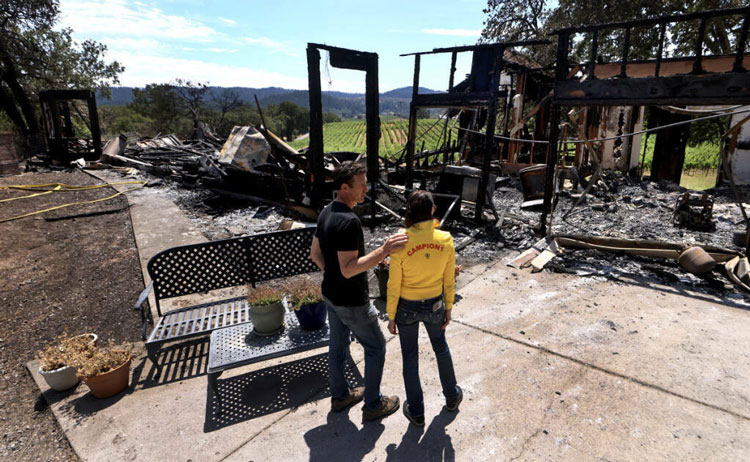
Wine country is wildfire country, and the devastating fires of 2017 and 2020 demonstrated how vulnerable Sonoma and Napa County wineries are. A CWMS assessment for your winery addresses the unique combination of challenges that vineyard and winery operations face: • Structure protection: Winery buildings often include a mix of construction types, barrel storage, tasting rooms, production facilities, and estate residences. Each requires different mitigation approaches. • Vineyard as defensible space: Properly managed vineyards can actually function as effective defensible space. We assess whether your vineyard layout and management practices provide adequate fuel breaks around structures. • Smoke taint risk: While our assessment focuses on structure and property protection, we understand that smoke exposure can devastate a vintage. Proper wildfire preparedness reduces the likelihood of fire reaching your vineyard and creating smoke taint conditions. • Insurance: Winery insurance is complex and expensive. Documented wildfire mitigation from a CWMS can help demonstrate to insurers that your operation takes risk reduction seriously. • Guest and employee safety: Tasting rooms and event spaces require evacuation planning and clear communication systems. We evaluate these elements as part of our assessment. • Historical and architectural preservation: Many Sonoma and Napa wineries include historic structures. We provide targeted recommendations that protect these buildings without compromising their character. We have consulted on numerous winery properties throughout Sonoma and Napa Counties, including the Bartholomew Estate Vineyard & Winery. Contact us to discuss your winery's specific needs.
In Sonoma, Napa, and Marin Counties, wildfire risk has become a significant factor in real estate transactions. A CWMS assessment helps realtors and their clients in several important ways: • Buyer confidence: A professional assessment gives buyers clear information about the property's wildfire risk and what has been done (or needs to be done) to mitigate it. This transparency builds confidence and can prevent deals from falling apart over wildfire concerns. • Insurance navigability: One of the biggest obstacles in fire-prone area real estate is insurance availability. Having a CWMS assessment, especially one showing completed mitigation work, helps buyers secure standard market insurance, which can be a deal-maker. • Property value documentation: A well-mitigated property is more valuable than an equivalent un-mitigated one. Our assessment provides professional documentation that supports property valuations. • Disclosure support: Sellers benefit from having professional documentation of their property's wildfire risk and mitigation status as part of the disclosure process. • Negotiation tool: When wildfire risk becomes a negotiation point, an objective CWMS assessment provides factual grounding for both parties rather than speculation. • Post-close action plan: Buyers receive a clear roadmap for improvements they can make after purchase, with costs and priorities laid out, which helps them budget for the reality of owning in a fire-prone area. We work with several real estate professionals across the North Bay. Contact us to discuss how we can support your transactions.

Find Out What Threatens Your Property

Stuart Mitchell, one of Northern California's most experienced CWMS professionals, identifies your risks, prioritizes the fixes, and hands you a clear plan. Over 1,000 assessments completed.

Schedule Your CWMS Assessment